



Undeveloped Film Left in Dad’s Camera
On November 11, 1946, nearly two years before I was born, Dad had been (what he called) “saved.” He always said that was the momentous day of his life. On the other hand, he never mentioned to me the day he had converted from prints to slides. I’m thinking this was in 1974. Maybe he had just loaded the film into his camera to take his weekly run of photographs. He had done this too as long as I had known. With this camera, the Argoflex Model E, he had taken photos of my baseball games, our family trips to Colorado, and the time we saw the Yankees in Kansas City and I got Mickey Mantle’s autograph.
Then for some reason I never thought to ask him about, that day in our family history, he changed his mind – perhaps thinking about it all day at Boeing, knowing he would have to ask Mom for approval at dinner. He was going to say the old film techniques were not good enough anymore.Though the kids were gone from the house, he needed better resolution. After his supper prayer, he might have asked: Alice, would you like to go to the Holy Lands? She was thrilled. And thus, the camera was put aside for forty years.It lay under the basement steps or on the metal garage shelves on the west side where he kept his lawn supplies.
When Mom died this month – she said she was going to Heaven as casually as if she were going shopping for a few hours, the camera had to go. It was so old I didn’t know how to post it on Craigslist. I advertised to sell a newer one, yet also obsolete of course, the Kodak instamatic he had given my daughter (and she’d given back to Grandpa when she scrapped it for digital), the kind where you saw your pictures almost the very moment you took them. Dad never cottoned to that idea. A picture worth taking, Paul, takes time to develop like spiritual maturity, he would say.
The afternoon I posted the ad, a photographer came out to buy the Kodak to construct a display of legacy equipment in his store. He saw the other camera in the corner, the moldy thing, the Argoflex. He studied the wrapper for a roll of film. The paper whispered “June, 1974” and now always will, but the roll was still in the camera. He said there still might be images here and maybe, just maybe, he could still develop them. That would be a neat memory of your Dad for you. The guy shook his head, perhaps contemplating a miracle like in which Dad might believe, but actually it could have meant many things. I too shook my head not knowing for sure even what I meant.
I thanked him. My head spun. He had perhaps offered me the possibility of a personal redemption – a salvation, even stronger than just the power of imagination on which I had long relied to honor Dad – now something that might capture the very sense of life that Dad had known and I could not. It seemed almost as if he offered at long last the key to Dad’s vague but inspirational life. We might, if we get lucky, see in the images Dad in his study preparing to teach his Bible study, Dad with Mom, Dad lost in his thoughts. One last time.
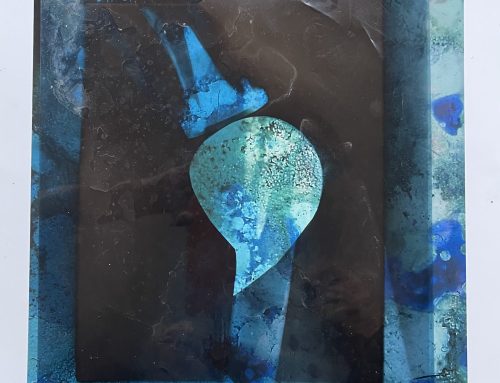
The next day the photographer sent me an email with his regrets – like all the others who had offered their sincere condolences at the funeral fourteen years ago. He had tried but he had found nothing developed in the celluloid.
Paul Dickey has appeared recently in Plume, The Midwest Quarterly, Laurel Review, I-70 Review, Plainsongs, failbetter.com, and Apple Valley Review. His recent book of poetry volume was released in September 2022, Anti-Realism in Shadows and Suppertime. He has also released in the past year a volume of flash fiction, What My Characters Should Have Said, and a poetry chapbook A Reading of Dali (Likely Misundersood) Which is Twenty Meters Becomes This Poet’s Self – portrait.




Leave A Comment