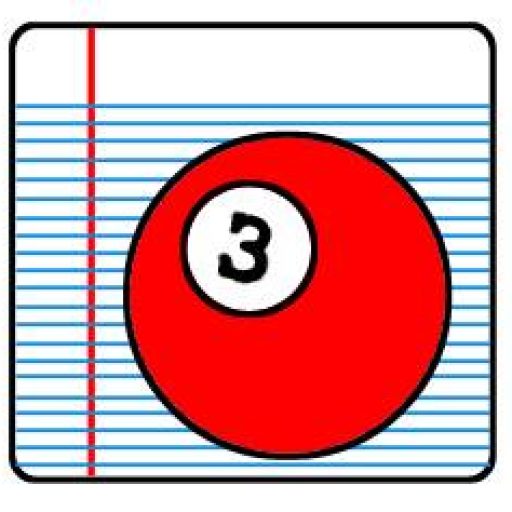



Artwork © Eric N. Peterson
How to Write About Men
Use the transcripts of your online chats to inspire dialogue. Speculate how he may have behaved had this conversation been face to face. Would he have reached out to touch you? Would his green eyes have flashed with lust? He is not yet yours, but you are still free, however, to assign him whatever desires you wish. Create a narrative from what was once uninspired chatter. But he can never know: he is not like you. You are free to submerge yourself in his words, in him, but you must do so alone.
Remember the hot stab of jealousy you felt catching him troll for sex on one of those coldly accommodating websites. You gazed at his profile pic. Then the low, purring voices of all those men sure to pursue him hotwired your head. You wrote, hoping to guarantee—at least for the few moments he’d need before realizing he’d opened cyber-silliness—in that moment he could not contact a rival. Acknowledge and anoint that pitiful desperation! Spread that decadent envy (not jealousy—he hasn’t once been yours!) across the page like jam given by a rich bitch who failed to RSVP. Punish your readers with the sickening realization that if He Who Has Besotted Our Esteemed Storyteller has indeed found a trick, all you can expect are trials, trouble, and nothing, not one damn word, that’s true.
Recall with numbing shame all those nonsense the-word-nuisance-defined messages you sent while flip-flopping from one sham reality to another, the speed revving your engine long after that asphalt crumbled to dust. Admit that your memories of his bewildered (and exponentially-expanding alarm) replies are forever dim and toneless. His repulsion at you (please, please, the God you’ve never trusted dutifully ignored, please let me warrant more than a simple inconvenience!) exists in a vacuum. It’s a junkyard walled in glass–no way in and no way out. You wasted so many words, making mere noise.
But you will not make that mistake now.
Of all the transcripts you’ve saved, there is one that mimics the structure of a story without any desecration from you. Your final “real” chat. You messaged him impulsively that night, before the speed could complete its game of whack-a-mole with your sense of agency. He demanded you be honest. He spoke of that brief, brief, (and vaguely sacrosanct) face-to-face encounter, demanding you revert to that same boy. Now! You succumbed. Then, enslaved behind your laptop, you did as you’d been told. You confessed your pain and loss, pounding the keyboard, a junkie for his replies. When he confided that your openness aroused him sexually, gratitude bloomed inside you like a cancer.
Yes, this combat of wills makes a perfect story: opening hook, rising conflict, unexpected climax.
But what of “the coincidence”?
Dumb luck is the fallback of dumb writers! The scourge of all fiction! Your chance encounter with him, and it is lost to you. (But forever sacrosanct…?) How to tell this story without including the mad, mad randomness of that tete-a-tete? Impossible! You cannot use this anecdote. You cannot tell readers how he grabbed you as your feet sped past, your busy, blind mind quite surprised! You cannot tell readers how you gaped into his visage, so much more handsome he was than his profile pic had promised. You cannot tell readers how he seemed almost shy to finally converse. You cannot tell your readers how stupid, stupid, stupid you feel (still feel!) for letting He Who Has Scarred Your Frosted Easy-Bake Heart retreat into the flesh-ridden halls of the bathhouse. Your excuse? A prior commitment! Please forgive! You cannot tell readers about a single moment of this star-cross’d Grindr-era goof. Try if you wish.
You will fail. Your story will fail.
Only one man could know how this absurdly brief encounter touched you. You could perhaps call him. Perhaps write him a message. But he is now weary of your words. You wrote in haste, you wrote in panic. Now he wishes you write him no more.
(Writers are the luckiest bastards. They get to live inside two worlds. And dictate what happens on one outta two, gurl!)
This is not a story, but this is the end.
Thomas Kearnes delivers pizza because teaching high-school English offered him no real incentives. He graduated with an MA from UT-Austin in Screenwriting. His first collection, 2020’s Texas Crude (Lethe Press), was nominated for a Literary Lambda Award. A 2022 followup from Dark Ink Books, Death by Misadventure, followed. He’s currently doing a final edit on a third collection, They’re Just Pissed I’m Not Dead, is in its final proofing before it’s out to find a home. Recent appearances include Split Lip Magazine, Fractured Lit, Hush, Bodega, Tiny Molecules, and Ghoulish Books’ Jackson and Stoker Award nommed queer horror collection, Bury Your Gays, winner earlier this fall of the British Fantasy Award. His Milk Candy Review story, “Cheap Tricks,” was nommed for Best Microfictions, “I Will Forget His Voice” wasa nommed for the Monarch Award (for short gay fiction), Best of the Net, three times for the Pushcart Prize, and twice made the Wigleaf Top 50 Flash Fictions longlist. His earlier appearances include the Adroit Journal, Gulf Coast Online, Foglifter, SmokeLong Quarterly, 3:AM Magazine, PANK, Berkeley Fiction Reivew, and Pseudopod. His novel-in-progress, What Happens Next Happens to Us, follows a couple that Kearnes based on an extended, abusive relationship and how its dynamic comes down to one thing: endurance.
Eric N. Peterson is from Atlanta, Ga. He’s been drawing cartoons all his life. He leans towards the absurd, imaginative, and the surreal, as that’s where all the flavor is.







Leave A Comment