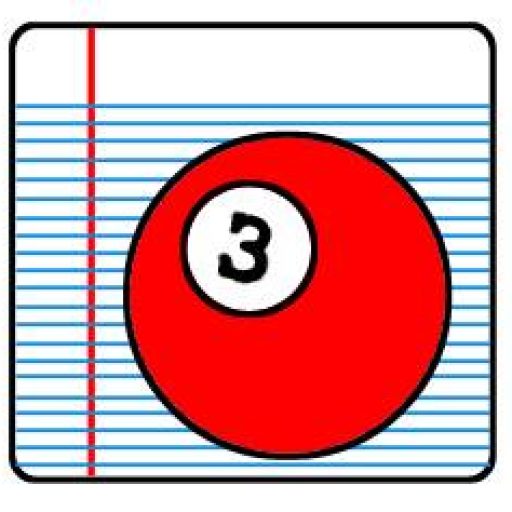



Artwork © Richard Spisak
Chapter 18
As to the degree that Easter, amongst other traditions, should be believed and adhered to on this 2025th time of commemorating Jesus purportedly rising from the grave, the 2025th time of pretending his resurrection was on this day, the 2025th time of this rising when clearly once of his rising would have been more than enough–the sun’s infinite rising having to be vastly more important to all species than a 200,000 year-late-savior (potentially x 2) to homo sapien existence or, more broadly, a 2,000,000 year-late-savior (potentially x 3) to hominid existence–is the”leap of faith,” degrees shaped by distance from all things logical and empirical, that Kierkegaard speaks of (Aristotle’s comment that with passions and instincts in man identical to brutes the only thing a man can pride himself on is his logic notwithstanding). But all things being mired in confusion, even outright dismissal of the irrational can seem illogical. Just as there is a bit more rational symmetry in Egyptians, lacking understanding of astrophysics and cosmology, to succumb, for a time, to the will of Amenhotep IV (Akhenaten) by deifying the life giving source, Aten, making a deity out of the physical manifestation of the sun than even Amen-Re had been, so as most souls are misaligned, as Plato points out, it is somewhat logical to think, as most Christians do, that humans are sinful beings instead of explorers of life in need of a savior, even if it is a bit of an overreach to think that a rebel uttering shallow axioms and who in flouting Roman rule was pilloried by being nailed to wood in a slow death should have, by random fate, been the individual selected as savior of mankind. According to the myth, he rose into the clouds and granted everlasting life to all who would believe in him as God and savior as though earlier religions had not granted everlasting life before on less conditional grounds. But such is the measurement of faith, a belief in anything in the absence of facts the way stories around Anubis, Osiris, and Aten, Zeus, Poseidon, and Hermes, and Jupiter, Venus, and myriad other gods throughout the world were imagined and believed in for even longer amounts of time by these masses who think their petty, selfish essences and immorality are worthy of immortality; and such is man’s fate that whatever intellectual prowess he possesses, he cannot refute any religion categorically.
And to those who project a fervent belief in the ignorance and the imaginary of the sequacious masses, repeating that which has been said repeatedly, they, in part, by their volition and through happenstance, are resurrected from the ordinary. Finding themselves lionized, they, these religious and secular preachers, are allowed to be leaders in all walks of life, but more like surfers than walkers moving on the waves of the ignorant masses, stirring sediment into clean waters by stoking the tendency for the incendiary within them and making their vindication their personal mission. Unfortunately, these wannabe tyrants, they who are slavish followers of the moods of the masses and how to use them to acquire power, become the role models for society in little time. In so doing, these individuals, unless becoming absolute dictators–dictators who, lacking support of the masses eventually, suddenly control by fear, and most Machiavellian, by granting privileges and wealth to those orchestrating their agendas of fear–are never afforded the opportunity to stray far from the masses which is a blessing in one sense until one factors in that the masses, too, allowing the third elevation of the soul, replete in self-preserving impulses and irrational selfish thrivings and strivings and irrationality to guide them, are the impetus of such leaders.These rulers and those whom they rule have souls that are askew; thus, even the best of representational democracies tend to be chaotic social experiments of depraved impulses when proper alignment of the soul, as Plato points out, is a necessity to achieve harmony, happiness, and logical progression for an individual man and society, whether perceived discretely or as a global synthesis.

Artwork © Richard Spisak
The lionized Trump, a televangelist of sorts who thumps his Bible on occasion, leads by ostensibly going after illegal immigrants to less directly mean non-citizens with legal visas to obliquely mean those who are not Caucasians and might become citizens with voting rights. Not only does he have a vested interest in disenfranchising these individuals, but, more importantly for him, it achieves the public mandate of ensuring that there is not a demographic tectonic shift away from white power. It is this fear on the part of the masses that has caused them to bequeath their liberties to him. These non-citizens, he tells us, threaten American jobs as though positions as farmhands, janitorial work cleaning human and avian defecation from sidewalks, or jobs cooking long hours in restaurants and cleaning linen and making beds in hotel rooms were such sought after jobs to begin with; and meanwhile, to disenfranchise legal citizens who are minorities, he foments illegitimate claims that to ensure that democrats, all communists in his opinion who will tax individuals beyond their worst nightmares (as though his tariffs were not that) do not regain the reigns of government, inconveniences should encumber and de-incentivise voting aspirations, and courts, legislators, and media who challenge his authority should be declared enemies of the people. To keep his Make America Great Again supporters ever so happy he throws them red meat like that of prohibiting transgender individuals in the military and seeking segregation of schools as MAGA supporters fear (hate) empathy and understanding which would dilute their rigid ideas of what America is supposed to be.
Whereas nothing definitive is known about Jesus–the paucity of petty, pithy statements that have become the limited platitudes attributed to him in the more popular and more positive depictions, the four canonized gospels, replete with idiotic phrases like “turn the other cheek,” meaning to allow violence to go unchecked even though this is unnatural even to gentle deer and baboons, or even to plants that often emit chemicals to attract the enemies of predators devouring their leaves, or that allowing oneself to be rended and razed in violence in any way prepares a human for non-violent resistance like confronting American policemen strangle-holding an alleged suspect–we know everything about Trump and yet people have voted this immoral demagogue in again. They have done so while cognizant that he stokes prejudices, and proclivities toward use of violence. They have done so knowing his crude statements about women, that he silenced sex scandals with hush money prior to an election, that he fomented an insurrection, that he masterminded alternative slates in state certification of election results, that he tried to persuade secretaries of states in various areas to recount votes more favorably, and stole classified documents.
That political and religious paradigms are so removed from being moral paragons, that most men are not only acolytes of such individuals but, in mass, propel them forward, and that both seem to be sustained and accelerated by the level of insanity of those unchecked impulses exacerbated by the other, is understandably disconcerting; and yet just as one has to deal with life as it is and not as one wants it to be (or so says Machiavelli), so he should be consoled that in modern times individual humans, despite being members of society, are not usually compelled, in word and action, to reinforce that which they deem to be wrong the way physical survival used to be predicated on fulfilling group directives, regardless how immoral or questionable they were, even if obsequious, complicit members of congress think otherwise. One can both detach himself from the illogic around him and divorce himself from the worst impulses that do rain down subconsciously even in the cleanest of minds. If occasional flatr-ups of one’s worst impulses occur, this is more to be condoned than condemned as entire blockage of ones innate darker energies can lead to feigning and believing a sanctimonious facade of one’s invention that is quite unreal. As Hawthorne reminds us, “Show truly if not your worst, yet some trait whereby the worst may be inferred.”
And so that better thoughts for better deportment can be found in oneself, or at least so that he does not fall in a Nihilistic hell of his own making, one must do as Descartes suggests when in the dire inferno of doubt that causes groping for that which is plausible instead of finding that which is real, an ever present condition of life for logical men. When the best societal institutions cannot be believed fully, according to Descartes, one must comply with the most moral and sensible precepts within them. Not only does it provide a solid anchor when besieged with doubts and uncertainty (ideas always seeming more reinforced if two or more people believe in them) but it makes him feel less alone when floundering in his search for truth the way a fish does of oxygen when pulled out of waters. And to mitigate his sense of alienation further, he should also recognize that when groping alone in the darkness, trying to find light, nothing is as poorly illuminated as he thinks. Compassion is the proper disposition of ethical constraint, and behind it is a light: an appreciation of the complexity and fragility of an organism, a living container of smaller organisms living within. This understanding and appreciation of this fragility and beauty of the complexity of every organism on the planet is the real truth that Keats meant when saying “Truth is beauty, and beauty is truth.”
As for hegemony, no country reigns over the world forever and every leading country that senses power waning away internally and externally always resorts to fuller or lesser fascist tendencies as a consequence. But we can reject the worst of fascism, and accept most graciously our waning influence and that a largely Hispanic manifestation will occur inwardly in this American experiment even as Trump decries it, declares English as the national language, and mandates that the Gulf of Mexico be hereafter referred to as the Gulf of America. And most enthusiastically, we can accept that messiahs, whether religious or political, are a tendency of a primitive mind and in dismissing them strive for more original and thoughtful expressions of the human condition.
Steven David Justin Sills is a literary writer in Honolulu Hawaii. His early book of poetry is in many academic libraries in the United States with a scanned copy in the Internet Archive. Sills’ early work can also be found on the Online Book Page at the University of Pennsylvania. After Sills finished his last literary novel “The Three Hour Lady” over three years ago, he began devoting time to writing a long war poem about what is happening in Ukraine. Most of those 25 cantos. including his most recent canto, can be seen at this particular journal. As his graduate degree is great books of the Western Canon, he has been hoping to write his own ethical treatise, and this forum affords him that opportunity.
As the Arkansas Gazette says, “Twenty-six poems make up this first published book by Steven Sills, 26, of Fayetteville. Sills’ vision is often a dark one. He writes of the homeless, the abused, the forgotten people. He is also intrigued with the mystical, the sensual, loss–as in losing those whom we hold dear, such as a spouse or lover–as well as the lost, such as someone who is autistic, who seems unreachable. Sills’ skillful use of the language to impart the telling moments of a life is his strength. He chooses his words carefully, employing a well-developed vocabulary. He is thoughtful about punctuation, where to break lines and when to make a new stanza. He’s obviously well versed in “great” literature. Sills’ command of language helps to soften the blows of some of the seemier passages found in his poems. Seamy may not be the best word to use. Perhaps gritty is a better word or just plain matter-of-fact and to the point…”
Richard Spisak began his artistic career as a light artist in the Lumonics Studios of Mel Tanner, a legendary Light Artist. After serving under Jack Horkheimer as a planetarium operator at the Miami Space-Transit Planetarium, he left to begin traveling with Lumist Kenvin Lyman, whose show Dazzleland Studios traveled across America. Richard later worked as a Laserist with LASERIUM and Laser Productions, served as a technical producer for the festival company PACE Concerts, and later as operations Manager and Senior Producer at WWHP and WTCN-TV in Stuart Florida.
Richard writes for Theatre, TV, radio, and the web. He published two short story collections, Two Small Windows, in a Pair of Mirror Doors, and Between the Silences. Followed by his poetry collection 7370 Allen Drive and the recently released STONE POETRY. Richard also produces “POETS of the East,” a televised webcast featuring poets from across the globe.
Chapter Guide
Chapter One
Chapter Two
Chapter Three
Chapter Four
Chapter Five
Chapter Six
Chapter Seven
Chapter Eight
Chapter Nine
Chapter Ten
Chapter Eleven
Chapter Twelve
Chapter Thirteen
Chapter Fourteen
Chapter Fifteen
Chapter Sixteen
Chapter Seventeen




[…] Chapter Twelve Chapter Thirteen Chapter Fourteen Chapter Fifteen Chapter Sixteen Chapter Seventeen Chapter Eighteen Chapter Nineteen Chapter Twenty Chapter Twenty- One Chapter Twenty-Two Chapter Twenty-Three Chapter […]