



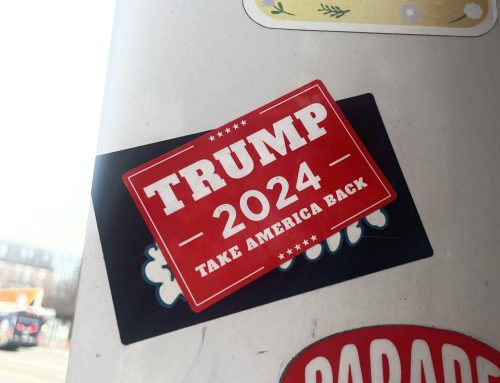
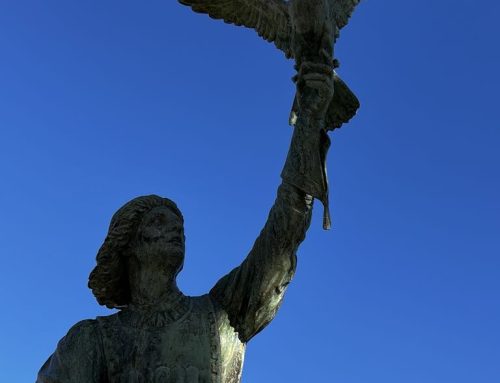
“BLOATUS-47” © Mark Blickley
Fancy Pets and Guns
The papers said the White House was planning to give new preference under refugee policies: Europeans, white South Africans, those who agreed with Trump’s anti-immigration stance. I saw the headline in a café, the way you see something tragic and ordinary at once. I thought about what that does to a country’s soul.
Hours later, in a bar in Houston, an Englishman at the end of the counter said England wasn’t what it used to be. He had a red face and certain manners. He said there were too many aliens now, and they all brought their fancy pets and guns.
It was Tuesday. The air smelled of beer and cooked onions. I was drinking bourbon because I liked quiet. He sipped gin. He said the streets back home were changed. He said you couldn’t tell who was who anymore.
I told him I understood. I said it must be strange, watching people come in with different customs, different animals, different fears. He nodded, relieved I was sympathetic.
He said he’d been in America six years. Liked some things here—guns, order, less talk. He said Britain used to be strong. He said empire had meant something.
He smiled, thinking I was on his side.
After that I stopped speaking. His voice kept. It filled the room the way memory fills a house.
I remembered how many places his people went—India, Africa, Australia. They brought rifles and customs, flags and hounds. They said they were bringing civilization, putting down roads, building schools. Always fancy pets and guns.
Then I thought of the new refugee plan. Preference for Europeans, for people who share certain fears. For those who believe certain borders matter more than others. It was the same logic: strangers are welcome if they fit the story. Alien if they do not.
He sat there, complaining about the aliens in Britain, ignorant that he too was an alien here. The very people he deplored were visiting him now. He drank his gin, stirred the ice.
It was always the same: arrival, foreign accent, different god, different food, then blame. He claimed gratitude was owed. As though colonialism had been kindness, as though the fence he now imagines was built around someone else’s house.
The world he spoke of—where his kind made nations “better”—is full of shadows. Shadows of displacement, extraction, loss. The very countries he thought had been improved stood up without his decree. They made languages, songs, children of their own fears and wonders.
He said Britain had built the world. I thought maybe the world was remaking Britain now.
He said the aliens had no right. I thought perhaps they did.
He said it wasn’t fair. I thought it never is.
The game on the screen had ended without score. The bartop was sticky. The light outside turned pale. The bartender changed the channel.
He looked around at people who were neither like him nor like “the aliens” as he defined them. He looked small. He looked tired.
He had said they brought their fancy pets and guns.
And I thought, yes—they did.
And maybe those things learned him.
Grady VanWright is a poet, author, and playwright based in Houston, Texas. He writes in a style he calls muscular lyricism—a fusion of Hemingway’s grit, Joyce’s lyricism, and Camus’ philosophy of the absurd, where clarity and compression meet rhythm and existential depth.
His poems balance strength and tenderness, silence and rhythm, absurdity and hope. He has been published in Washington Square Review (2025), The McNeese Review, South Florida Poetry Journal, Oddball Magazine, Blood+Honey, Querencia Press, The Genre Society, The Dead Mule School of Southern Literature, Sheila-Na-Gig, Mayday Magazine, The ManifestStation Magazine, and other literary journals. He is a member of The Authors Guild and The Poetry Society of New York.
Mark Blickley grew up within walking distance of New York’s Bronx Zoo. He is a proud member of the Dramatists Guild, PEN American Center, and Veterans For Responsible Leadership. The mantra for his creative life comes from the pen of Peruvian author Mario Vargas Llosa, “Life is a shitstorm, in which art is our only umbrella.”





Leave A Comment