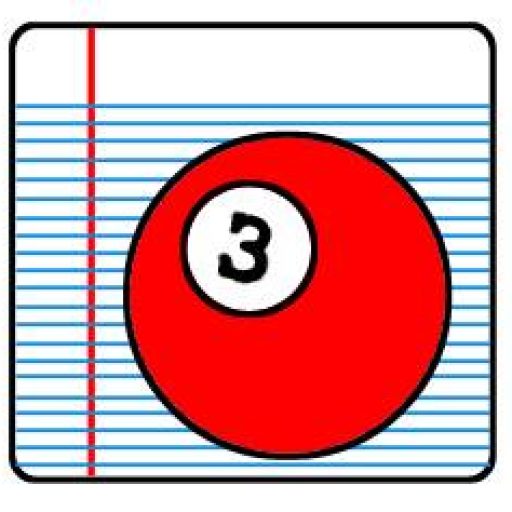



Artwork © Richard Spisak
The Task Force Came at Noon
They came at noon. They always do. Men with clipped hair and black folders. They called it the Joint Task Force to Combat Anti-Semitism. A good name. A strong name. A name you’d put on a ship before sending it into a storm.
They said they came to protect Jewish students. They said they came to fight hate. But the folders didn’t mention swastikas or slurs. They mentioned Diversity, Equity, and Inclusion. They mentioned admissions quotas. They mentioned Harvard. And Columbia. And the billions of federal dollars floating like fat trout beneath the surface.
In Cambridge, the president of the university stood at the gates. He wore a fine suit and the face of a man who had been spoken to sternly by people with no sense of irony. The men with the folders said DEI was discriminatory. That inclusion had gone too far. That merit had suffered under the weight of kindness. They said the Jews were unsafe. And they might be. But DEI hadn’t put them there. And it sure as hell wasn’t going to get them out.
Down in Washington, the men held press conferences. They said this was about antisemitism. They said this was about safety. They used words like “liberation.” The fascists in Spain had used the same words. They liberated cities by setting them on fire and calling the ashes clean.
Columbia tried to play ball. Their president changed suits three times in one week and still couldn’t sweat out the stench. Faculty rebelled. Students howled. The university backpedaled like a man in deep water with boots full of stones. And the Task Force smiled.
They asked for records. They asked for speakers lists. They asked for names. The kind of names people once wrote down on forms in Berlin and never saw again.
They said DEI created division. That race had no place in admissions. That fairness meant sameness and safety meant silence. They said antisemitism was a problem. And they were right. But they fought it like a blind man swinging a hammer in a nursery.
No one likes a bigot. And no student, Jew or Gentile, should go to class afraid. But if you fight hate by banning equity, what you’re really banning is the idea that fairness should look like everyone, not just someone. That kind of fight isn’t a shield. It’s a cudgel.
The Task Force said the money would stop. Billions. Contracts. Grants. The lifeblood of labs and salaries and the quiet dignity of research. They held the purse strings like a garrote and smiled through their teeth.
“Choose,” they said. “Safety or speech. Jews or justice. Truth or funding.”
But they didn’t offer safety. They offered control.
The president at Harvard said no. At least for now. The wind picked up in Washington. The folders snapped shut.
The old men in the task force would say they were patriots. The kind who wrap themselves in flags so you won’t notice they’ve taken your coat. They come to “liberate,” always. And they always bring rules.
But students are not sheep. And universities are not fields to be cleared. They are houses. Strong houses. Old, with stone and scars and memory.
They will fight, these houses. Maybe quietly. Maybe with committees and letters and tired meetings. But fight they will.
And the Task Force, with its strong name and hollow heart, may find itself standing alone. Like all invaders do when the people decide not to be saved.
Grady VanWright is a poet, author, and playwright whose work blends introspection, independence, and the surreal edges of the human condition. Based in Houston, Texas, he has been writing and reading poetry for over 25 years, drawing inspiration from a lifetime of experiences and historical fascinations. His work has been published in Washington Square Review (2025), The McNeese Review, and numerous online literary journals. With a distinctive voice that merges stream-of-consciousness with moderate surrealism, Grady continues to craft evocative narratives that challenge perception and invite contemplation.
Richard Spisak began his artistic career as a light artist in the Lumonics Studios of Mel Tanner, a legendary Light Artist. After serving under Jack Horkheimer as a planetarium operator at the Miami Space-Transit Planetarium, he left to begin traveling with Lumist Kenvin Lyman, whose show Dazzleland Studios traveled across America. Richard later worked as a Laserist with LASERIUM and Laser Productions, served as a technical producer for the festival company PACE Concerts, and later as operations Manager and Senior Producer at WWHP and WTCN-TV in Stuart Florida.
Richard writes for Theatre, TV, radio, and the web. He published two short story collections, Two Small Windows, in a Pair of Mirror Doors, and Between the Silences. Followed by his poetry collection 7370 Allen Drive and the recently released STONE POETRY. Richard also produces “POETS of the East,” a televised webcast featuring poets from across the globe.







Leave A Comment